
Design-Build vs. Design-Bid-Build in LA: Which Delivery Method Actually Saves Money?
Design-Build vs. Design-Bid-Build in LA: Which Delivery Method Actually Saves Money?
Construction bids that may appear to be drastically different on paper can at times end up being more expensive because of the lower price. It is very important for people investing in their property to understand the financial principles behind those bids.
When one starts looking for design-build contractors in Los Angeles, they are normally seeking an answer to the main question: how to control the cost of their project while maintaining the design concept intact. There are many ways to deliver the construction projects; however, the two major ones are design-build and design-bid-build.
Here at Arbor Construction, Inc., we oversee custom home construction, major renovation work, and complicated construction projects within Greater Los Angeles. Often, we assist clients with assessing their delivery options prior to construction. Our experience shows that the lowest bid does not always result in the lowest total cost of the project.
In order to figure out which system is cheaper in reality, it is necessary to look further than just the initial cost estimates from the construction company. It is important to consider the overall cost of the system, including early coordination, project delays, municipal permits, and mid-project change orders.
What Is Design-Build Construction?
Design-build construction is a delivery system in which a single unit takes charge of both the designing process and the construction of the building. Instead of working on separate agreements for architects and constructors, the property owner works under a single agreement from start to finish.
In this process, the designer, engineer, and constructor all work together as an integrated team. Here at Arbor Construction, we see that using this process lets the contractor give input on the costs involved. If a particular architectural element will require overly expensive engineering or an overly difficult permitting process, the constructor can point this out before the plans are finished.
This, therefore, means that the owner is not responsible for mediating conflicts that might arise between the architect and the construction team. The design-build company takes the risk for the design’s constructability and coordination.
What Is Design-Bid-Build?
The design-bid-build process is the traditional way of constructing in which the property owner engages an architect in designing the project first. After finishing the construction plans, the owner invites competitive bids from several general contractors to construct according to the plans.
This approach is linear and sequential. The main benefit is that the comparison of the bids can be done fairly, assuming that the drawings are perfectly detailed.
On the other hand, since the builders are not involved in the design stage, they do not have an opportunity to give their feedback about the materials and labor costs and any possible engineering advantages. If the bids from the contractors are much higher than what the owner had in his/her mind, then the owner has to pay the architect for reworking the drawings.
Design-Build vs. Design-Bid-Build Cost Comparison
It is important for the owner of the property to understand how the risk-reward allocation changes in these two models.
Factor | Design-Build | Design-Bid-Build |
Design responsibility | Single entity (Design-Builder) | Architect/Designer |
Contractor involvement | From early concept and preconstruction | Only after blueprints are 100% complete |
Pricing approach | Continuous budget alignment during design | Competitive hard bids on finished plans |
Cost control | Collaborative value engineering early on | Dependent on accurate, error-free blueprints |
Change-order exposure | Lower (builder coordinates the design) | Higher (owner pays for design gaps/errors) |
Schedule | Often faster (phases can overlap) | Slower (strictly linear phases) |
Coordination | Internal team communication | Owner mediates between architect and builder |
Owner control | Owner approves milestones, delegates details | Owner heavily involved in separate contracts |
Risk allocation | Design-Builder assumes design/build risk | Owner assumes risk for design completeness |
Best suited for | Complex projects, fast timelines, tight budgets | Straightforward scopes, fully finalized designs |
Does Design-Build Actually Save Money in Los Angeles?
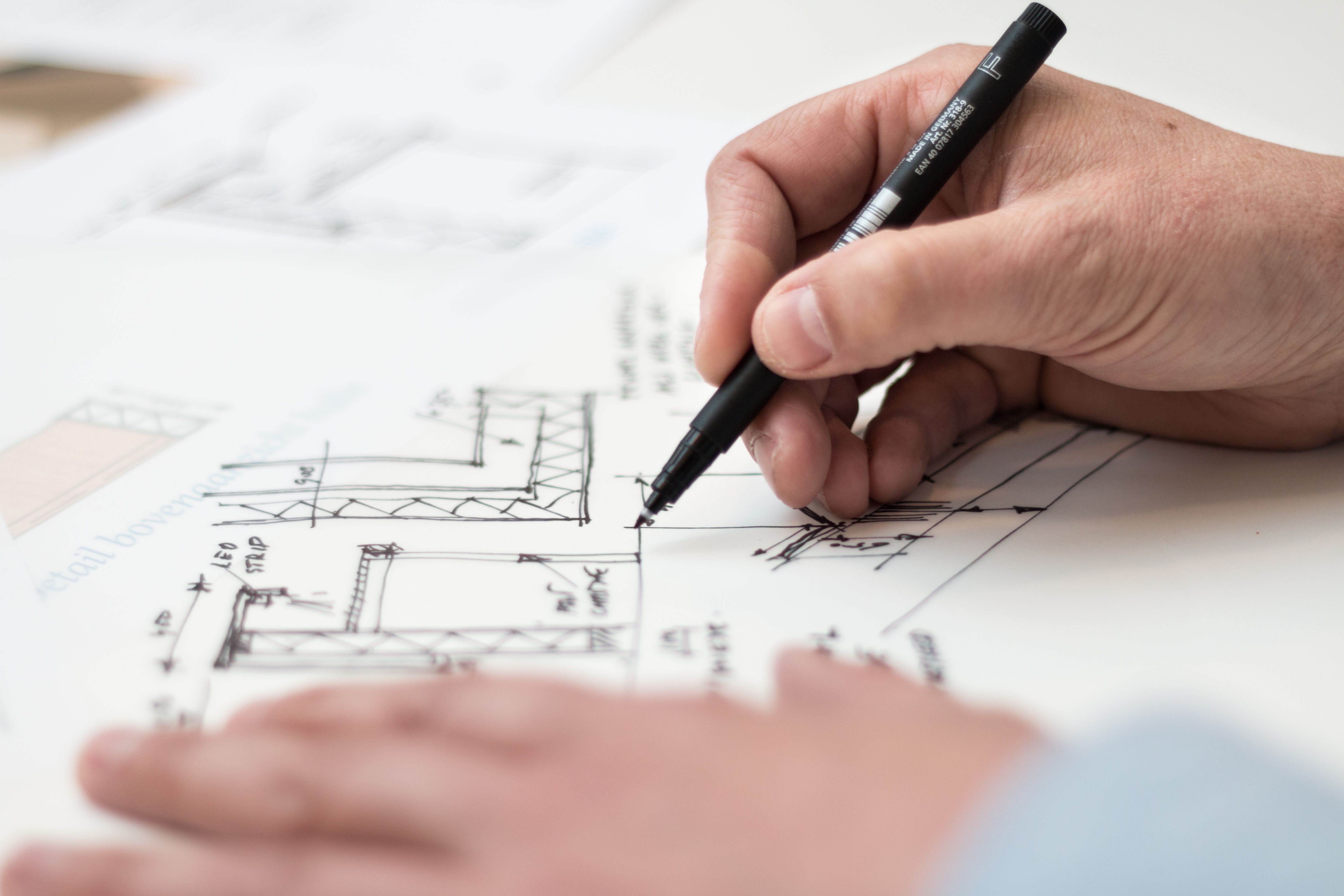
To decide whether design-build comes out as more economical, it is necessary to distinguish between the initial bid and the total project cost. Although design-bid-build generates the lowest initial bids most of the time, design-build ends up having a total cost that is lower than design-bid-build.
This is also borne out by research done in industry. For instance, research by the Federal Highway Administration (FHWA) on public transportation facilities has shown that using the design-build process may shorten the total time taken in project completion while ensuring better cost certainty. It would, however, be unwise to extrapolate the percentage cost saved in this specific example to a custom home construction in Los Angeles.
These savings occur through several distinct channels:
Earlier cost feedback
Architects are concerned with space, light, and beauty; however, they do not obtain building materials or arrange the workforce each day. The builder does that. If the builder is present at the table when ideas for the structure are being generated, they will be able to guide the designer to avoid expensive building structures.
Reduced rework
According to the conventional process, any misalignment between the vision of the architect and the reality of the site could lead to demolition and reconstruction. The continuous constructability analysis by the combined entity of the designer and the constructor avoids any physical reworking.
Schedule compression and carrying costs
In real estate, time is money. The more time a development project takes, the more money the owner has to pay in terms of finance charges, property taxes, temporary living expenses, or rent. This is because design-build allows site work to commence even as interior finishing details are being finalized.
Procurement planning
Material shortages can hold up construction on a project site for months on end. Having an effective team will allow one to spot materials that have long lead times, such as European windows or HVAC equipment and purchase them prior to having the complete permits for the architecture design.
Where Design-Bid-Build Can Still Make Financial Sense
Although there may be efficiencies involved in an integrated approach, the design-bid-build method is still a legitimate process and can even prove to be a financially lucrative one.
This conventional process can prove to be quite appealing when an owner has already completed 100% of his/her detailed construction documents. When an owner has invested the past year into working with a separate architect who leaves no doubt about the drawings he has drawn, then competing on price becomes essential for local contractors.
In addition, the design-bid-build method makes sense for projects with standardized scopes or fairly simple scopes. If you are working on a simple cosmetic change and there is not much structural engineering involved, coordination issues will not be a problem.
Lastly, sometimes the owner wants multiple voices for the project. The owner may want the architect to be the one that oversees the work of the builder. In those cases where the owner has the time and administrative ability and is willing to take the risk, competitive bidding can still be used effectively.
Why Los Angeles Construction Can Change the Equation
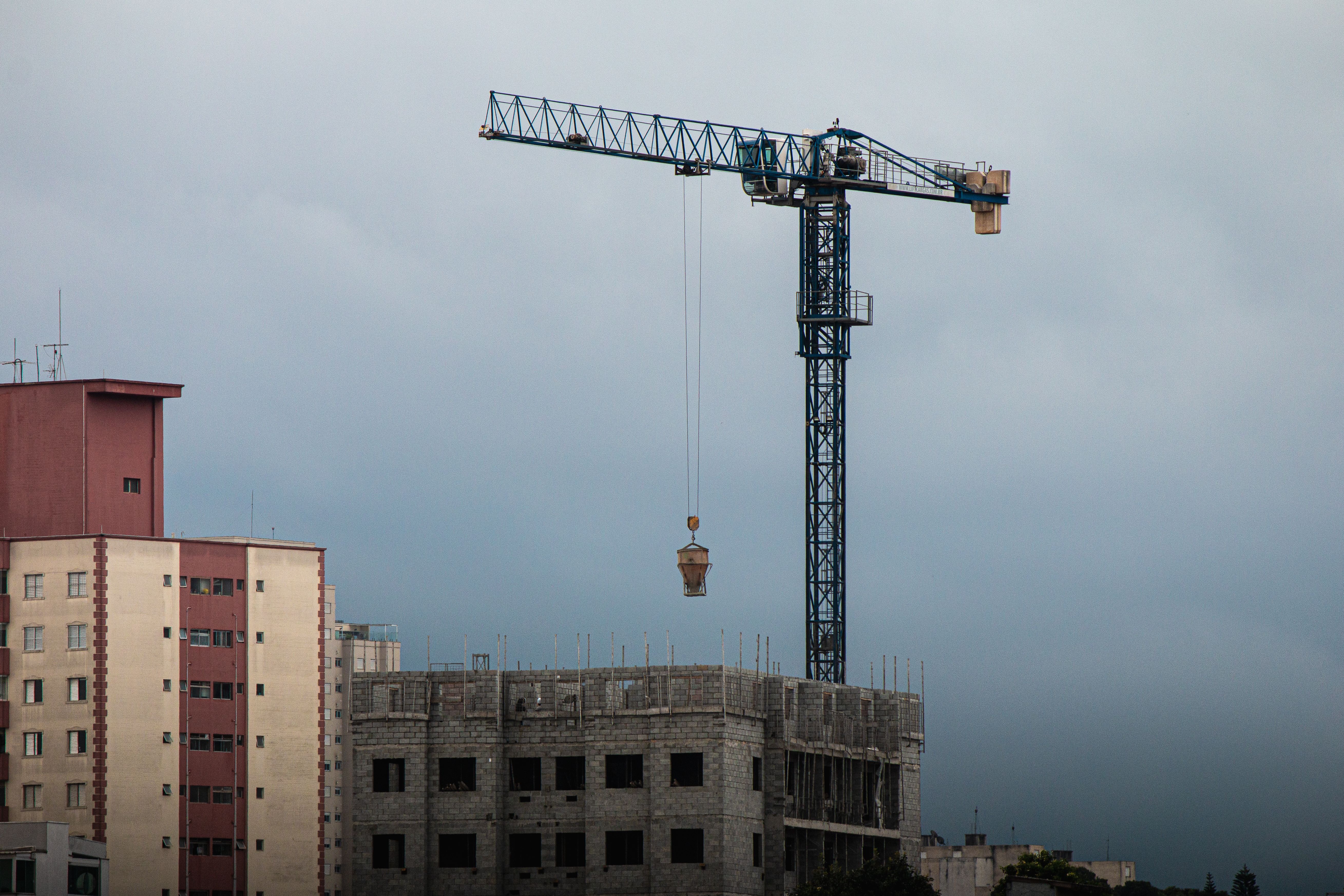
The local geography and city laws affect construction costs. Constructing in Southern California presents a set of unique factors that make communication between the architect and builder very costly when it is disjointed.
Hillside and coastal engineering
Some of the most appealing homes located in neighborhoods such as Pacific Palisades, Brentwood, and Malibu lie in hillside locations or in areas close to the coast. Such developments need a lot of soil surveys, custom retaining walls, and structural designs. Without the early involvement of a contractor who will actually undertake the excavation and grading, the architect designing a hillside home faces the danger of huge cost overruns.
Seismic and energy regulations
The state of California mandates stringent regulations related to seismic structural design and aggressive Title 24 requirements for energy efficiency. Dealing with these demands requires a coordinated effort among the structural engineer, the architect, and the building contractor. Having one person responsible will make sure that the two do not contradict each other.
Municipal complexity
Permitting is known for being complicated within this area. What needs to be mentioned is that the Los Angeles Department of Building and Safety (LADBS) regulates the City of Los Angeles; however, other independent cities, including Santa Monica, Beverly Hills, and Malibu, have their own municipal departments. They each have their own separate permitting, coastal commission, or architectural board process. A unified team familiar with the peculiarities of municipal regulations will save an architect from having his design rejected by the local municipality several months later.
How Change Orders Affect the Real Cost of a Project
It is important to be familiar with change orders when dealing with construction financing. It refers to an amendment to the construction contract in terms of the project scope, schedule, and/or total cost of construction.
Under the conventional design-bid-build approach, the bids by contractors are submitted based on what is presented in the plans. In cases where the architectural plans overlook some necessary structural aspects or any unseen plumbing line within the walls, the contractor is perfectly entitled to make a change order. Under this approach, it is up to the owner to take care of such design mistakes. This explains how a bid of $1.5 million easily escalates to $1.8 million.
On the other hand, when it comes to design-build firms, it is up to them to guarantee the accuracy of the design documents. In case they fail to identify something they should have noticed in the design process, then the money spent on correcting it will most likely be their responsibility.
This is precisely what makes it so crucial to have professional guidance. Spending some time analyzing what construction management services actually cover makes it clearer how coordination helps to avoid costly mistakes related to the scope of work.
Which Delivery Method Fits a Los Angeles Custom Home?
Choosing the right approach comes down to your priorities, your risk tolerance, and the complexity of your property.
Design-build is likely the right fit when:
You require one individual responsible for both the budget and the quality.
You require precise feedback on prices prior to finalizing the architectural plan.
You will be constructing on a difficult hilltop, coast, or city land.
You wish to shorten the time required for your entire project.
You would rather not mediate arguments that might arise between the two separate teams of architects and builders.
You are engaged in constructing custom luxury homes, where great attention is needed.
Design-bid-build is likely the right fit when:
The architecture plans and engineering documents are already 100 percent completed.
The project is structurally simple and presents few site difficulties.
You wish to generate more than one competitive bid to arrive at the most economical initial margin.
You have enough time and experience to handle separate contracts as well as to take the risk of design omission.
Making the Right Choice for Your Property
A property owner’s worst possible mistake would be to choose a method based only on the attractiveness of the low starting price offered, regardless of issues such as coordination problems, bureaucratic delays, and change orders. There is a proper role in the industry for both design/build and design/bid/build, but their risk distribution is totally different.
If you wish to be engaged in bidding, then the conventional process works great for you. If what you want is cost certainty, time efficiency, and teamwork, thereby reducing your managerial workload, then forming an integrated team becomes a much safer financial choice for complicated constructions and home remodeling in Los Angeles.
Do you need assistance planning a custom house, remodeling, or a large-scale construction project in Los Angeles? Our team from Arbor Construction, Inc. will assist you in analyzing the restrictions that exist for your lot, the scale of the project, and its compliance with your budget. Contact us through our Tarzana office.
Frequently Asked Questions
Is design-build cheaper than design-bid-build?
Although initial bid prices are usually lower under the design-bid-build system, design-build is more cost-effective overall. As a result of getting the contractor involved early in the design process, the owner will be able to eliminate the need for expensive redesigns and change orders during the project itself.
Is design-build better for a custom home in Los Angeles?
Design-build works very well for the majority of custom-built homes in LA. The terrain in LA may be difficult; there is seismic engineering involved, and the permitting process is not easy. With a single team, one can make sure that the design will actually work in the real world.
Can I use my own architect with a design-build contractor?
Certainly, there are many design-build companies that provide construction management services in Los Angeles and would be delighted to work with the architect you select. In this scenario, the contractor becomes the preconstruction manager who does cost estimation and constructibility review while the architect finishes up the blueprint.
How do change orders work under design-build?
Change orders become less common within the design-build method. Since the builder controls the design process, the owner is not held accountable if any design flaw results in change orders. Normally, change orders arise only when the owner introduces a new requirement or something totally unforeseen comes into view.
Does design-build make construction faster?
Surely, design-build creates a faster process of completing a project. The builder is able to start preparing the ground and buying the materials needed for construction while the designer is working on creating the last interior designs.
What permits are needed for a custom home in Los Angeles?
The Permitting process is very dependent upon the particular municipality. If one wants to do a project in the City of Los Angeles, one must get the LADBS approval, but if the home is located in Santa Monica, Malibu, or Beverly Hills, then different city permits are necessary.

