
Full Home Reconstruction After a Fire: Step-by-Step Timeline for LA & Santa Monica Homeowners
You are standing where your front door used to be. The air still smells like ash, your adjuster has left three voicemails, and everyone has advice about what to do first. Where do you even begin?
Full home reconstruction after a fire is a long road, but it follows a clear order. In this guide, we at Arbor Construction walk you through every phase, from debris clearance to your Certificate of Occupancy. We also share the latest local numbers, the insurance deadlines that matter, and what to ask before you hire anyone.
How Long Does Full Home Reconstruction Take After a Fire?
Plan on 14 to 22 months from a cleared lot to move in. That range comes from the rebuilds we manage across Los Angeles and Malibu. Debris clearance takes one to three months, permits take two to three months, and construction runs nine to fourteen months.
Recent Palisades numbers show where the time goes. According to FOX 11 Los Angeles, the Palisades Fire destroyed nearly 6,000 homes. By July 2026, LADBS had issued rebuild permits for 1,419 properties, but only 28 addresses had a Certificate of Occupancy.
Permits are no longer the biggest hurdle. CalMatters reported that local governments issued home permits about three times faster in 2025 than in the five years before the fire. Building the house is now the slow part.
Full Home Reconstruction Timeline at a Glance
Here is the full sequence on one screen. Some phases overlap, so your total will depend on your lot, your design, and your insurer.
Phase | Typical length | What happens |
Debris clearance and testing | 1 to 3 months | Lot is cleared and checked for lead and asbestos |
Site assessment | A few weeks, overlaps with clearance | Foundation review, survey, and soil report if needed |
Design and plans | 1 to 2 months | Floor plan, fire resistant details, engineering |
Permit review | 2 to 3 months | LADBS, City of Malibu, or City of Santa Monica reviews plans |
Construction | 9 to 14 months | Foundation through finishes |
Final inspections | Last few weeks | Certificate of Occupancy issued |
Total | 14 to 22 months | Cleared lot to move in day |
Step 1: Safety, Debris Clearance, and Testing
Nothing else can start until the lot is safe and clear. Debris removal runs through the Army Corps of Engineers program or a licensed private contractor.
Older Los Angeles homes can hold lead and asbestos, and fire spreads both. A hygienist tests the site, and a licensed contractor handles the removal. If your home was only partly damaged, this step is a bit different. You still need testing for smoke residue and hidden water damage before anyone touches a wall.
While that happens, take care of the paperwork side:
Call your insurer and ask for your living expense advance.
Photograph everything you can, including neighbors’ views of your lot.
Save every receipt for hotels, meals, and storage.
Start a contents list, even a rough one.
Step 2: Site Assessment Before You Design Anything
Once the lot is clear, we look at what is left underneath. Heat can weaken concrete and warp steel, so a foundation that looks fine may not be fine. A survey and a structural review tell you what can stay.
Hillside lots add another layer. In the Santa Monica Mountains and along the Malibu coast, the city may require a geotechnical report before it issues permits. Skipping this early is one of the costliest mistakes we see. Ordering the report while you wait on other tasks saves weeks later.
Step 3: Design and Plans for Your Rebuild
Here you choose between two paths.
A like-for-like rebuild keeps your original footprint and square footage. It qualifies for the fastest permit track under the current emergency orders, and you can still redesign the inside completely. A modified rebuild changes the footprint or adds space. It takes a little longer to permit, but it is fully possible.
Either way, the new house must meet California’s Wildland Urban Interface rules. That means California Building Code Chapter 7A in many LA and Malibu neighborhoods. Expect to see these features in your plans:
Class A fire-rated roofing
Ignition-resistant siding such as stucco or fiber cement
Ember resistant vents with fine metal mesh
Dual-pane, tempered windows
Sealed eaves and protected attic openings
Landscaping that leaves defensible space around the house
Fire-resistant details cost the least when they are drawn into the plans from day one. Adding them later costs more and looks worse.
Step 4: Permits in Los Angeles, Malibu, and Santa Monica
Where you rebuild decides who reviews your plans. Pacific Palisades projects go to LADBS. Malibu projects go to the City of Malibu. Santa Monica homes go through the City of Santa Monica’s building department.
On our Palisades rebuilds, like-for-like reviews have been running about 60 to 90 days. Many qualifying owners can also get permit and plan check fee relief, which can save tens of thousands of dollars. Programs change, so confirm your eligibility before you file.
Our team prepares and files every submittal for our clients. You can see how we handle this on our Pacific Palisades fire rebuild page.
Step 5: Construction, the Longest Stretch
Construction usually runs nine to fourteen months. The order rarely changes:
Foundation and slab work
Structural framing
Roofing and exterior shell
Plumbing, electrical, and HVAC rough-in
Insulation and drywall
Cabinetry, tile, and flooring
Paint, fixtures, and final finishes
Inspections happen between these stages. After a permit is issued, LADBS has said it aims to inspect Palisades rebuilds within two business days of a request. Our job is to line up trades so no crew sits idle waiting on another.
Step 6: Final Inspections and Your Certificate of Occupancy
The last step is the city’s final sign-off. Once your home passes, you get a Certificate of Occupancy, and you can move in. Do a full walkthrough with your contractor first. Test every window, outlet, and appliance, and make a written punch list.
Insurance Clocks Every Homeowner Should Know
Money questions shape every phase above, so keep these deadlines handy. The California Department of Insurance says additional living expense coverage lasts 36 months, with six-month extensions for good cause. Insurers must also give an advance of at least four months of living costs on a total loss claim when you ask.
California law also gives you at least 36 months after a declared emergency to collect the full replacement cost. That time can disappear fast when permits and plans take a year.
A detailed, line-by-line construction estimate helps your adjuster see the real cost of a luxury rebuild. We are not public adjusters, but we write scopes that match local pricing. For more on how this works, read our guide on why a fire rebuild needs a damage restoration contractor.
Fire Damage Restoration Santa Monica: What Changes Near the Pier
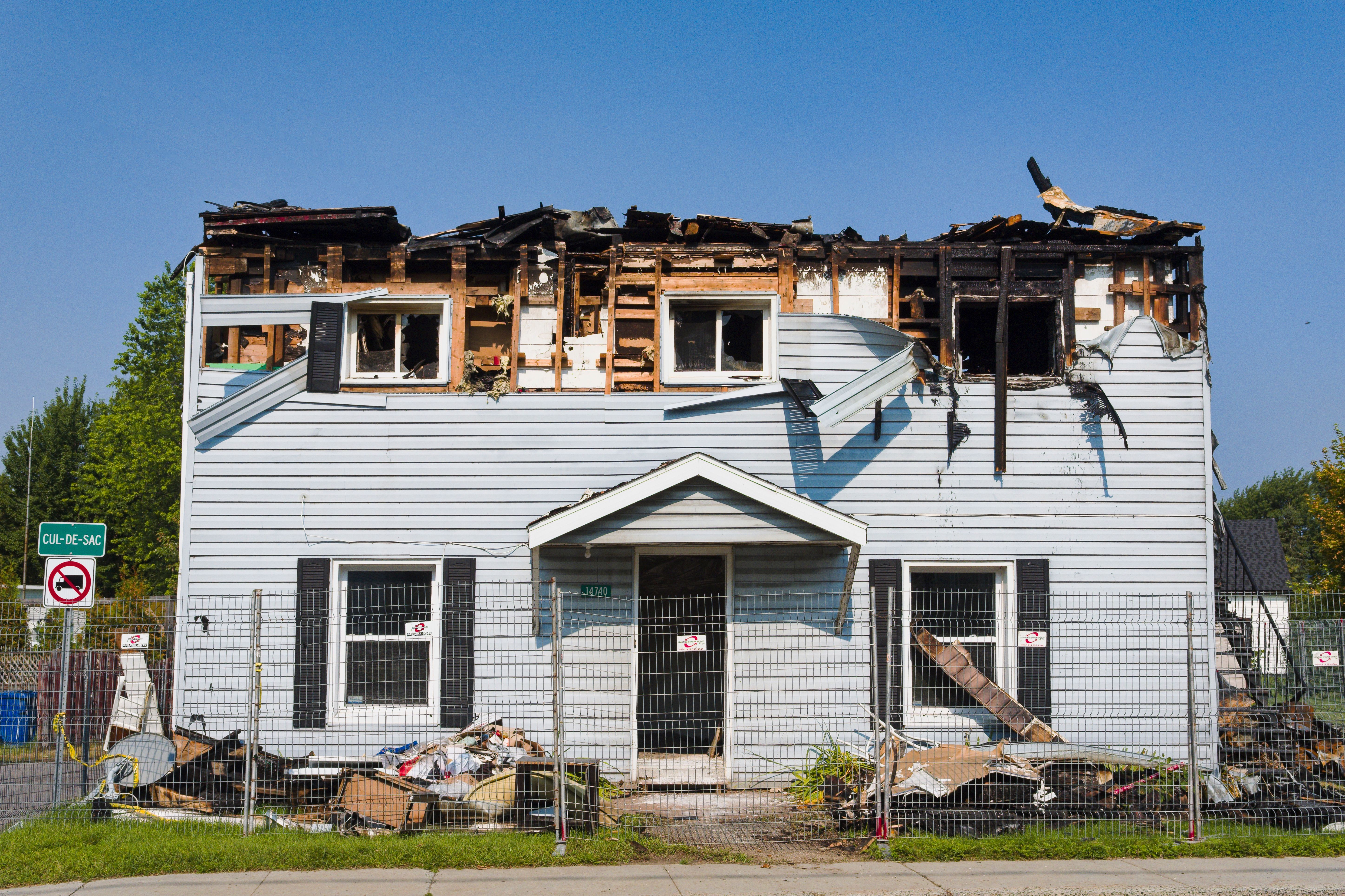
Not every fire loss in the Westside is a total loss. Many Santa Monica homeowners deal with smoke, soot, ember damage, or water from firefighting. Those problems are quieter, but they are not small.
Smoke particles are acidic and travel through ducts and wall cavities. Painting over them just locks in the odor. Coastal humidity near the Santa Monica Pier and Ocean Park also slows drying, which gives mold a head start in wet framing.
A partial job still needs a plan. For fire damage restoration in Santa Monica, we usually test first, open up affected walls, repair the structure, and then rebuild the finishes. Permits run through the City of Santa Monica rather than LADBS. Whether you live off Montana Avenue or a few blocks from the Third Street Promenade, the process works the same way. You can also read about our Santa Monica home building and remodeling services.
For owners up the coast, the picture is bigger. A full home reconstruction in Pacific Palisades might sit near Palisades Village, Temescal Canyon, or Will Rogers State Beach. In Malibu, it could be along Pacific Coast Highway near the Malibu Pier. Each area has its own review rules and soil concerns.
Five Mistakes That Slow Down a Rebuild
Waiting months to hire a contractor
Locking in a design before the insurance scope is clear
Choosing the lowest bid without checking permit experience
Skipping the soil report on a hillside lot
Signing a settlement before the full rebuild cost is known
How to Choose a Fire Rebuild Contractor Near You
Searching for a fire rebuild contractor near you will turn up a long list. Narrow it with these checks:
License: Verify an active general contractor license on the CSLB website.
Local experience: Ask about past WUI projects and hillside builds.
Permit record: Ask which LADBS, Malibu, or Santa Monica permits they have pulled.
Single team: Design, permits, and construction under one roof means fewer gaps.
Clear paperwork: A written scope your insurer can read
Arbor Construction is licensed (CA LIC #941491), bonded, and insured, and we manage design, permits, and construction from our Tarzana office.
Ready to Map Out Your Rebuild?
A fire rebuild feels huge on day one. Broken into phases, it becomes a list you can work through one item at a time. The homeowners who move fastest are the ones who bring in a contractor early, before the plans and the insurance scope get locked.
If you are weighing a full home reconstruction in LA, Malibu, the Palisades, or Santa Monica, we would be glad to talk it through. Contact Arbor Construction or call 818 996 2160 for a free rebuild estimate. We will come to you
Frequently Asked Questions
How long does full home reconstruction take after a fire in Los Angeles?
Most full home reconstruction projects in Los Angeles take 14 to 22 months from a cleared lot to move in. Debris removal, permits, and construction each add time, and hillside lots can run longer.
Do I need a contractor for fire damage restoration in Santa Monica if my home is only partly damaged?
Usually yes. Smoke, soot, and hidden water damage reach inside walls and ducts, so a cosmetic repair can leave odors and mold behind. A licensed contractor tests, repairs the structure, and coordinates permits with the City of Santa Monica.
What is a like-for-like rebuild?
A like-for-like rebuild keeps your home’s original footprint and square footage. It qualifies for the fastest permit track under the emergency orders. You can still redesign the interior layout and choose all new finishes.
How long do I have to collect replacement costs from my insurer in California?
California law gives you at least 36 months from your first actual cash value payment to collect the full replacement cost after a declared emergency. Extra six-month extensions can apply for good cause.
Are permit fees waived for fire rebuilds in Los Angeles?
Qualifying homeowners may get permit and plan check fee relief in Los Angeles and Malibu, including owners who held title before January 7, 2025. Programs change, so confirm your eligibility before you file.

